Archive for the 'Social Media Marketing' Category
Social Media Taught at School
Looks like you may be new here, you may want to subscribe to my RSS feed. Thanks for visiting!
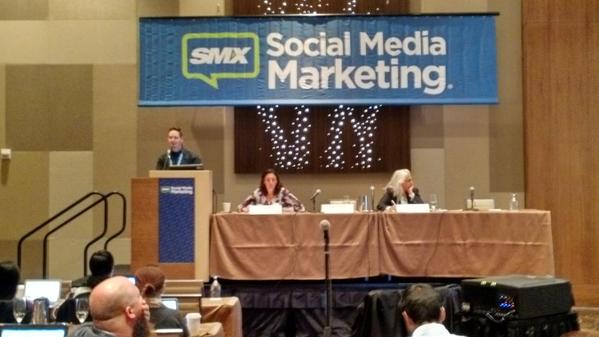
So my mom and sister are driving me to the airport because I was on my way to SMX Social Media in Long Beach, CA. On the way they were asking me what the conference was about that I was going to. I was explaining social media to them when my sister pulled out a piece of paper out of her backpack and handed it to me. It was a study guide for an exam in a communications class she was taking that was all about social networks.
I was dumbfounded they were teaching about social networking in college when most all schools aren’t even teaching search engine optimization and the ones that do teach it aren’t teaching the best practices. My undergraduate degree was in Digital Media where we learned a lot about web design, animation, and accessibility so SEO did come up during our discussions. One teacher took 45 minutes to go over search engine optimization on Websites. Some of his recommendations included hiding keywords with the same color text as background, stuffing meta tags, and the typical spam stuff you’ve heard before. According to him, meta tags were one of the biggest things search engines looked at. I kept my mouth shut with a big shit eating grin on my face the whole time.
Social Media on TV
It’s amazing to see social networking going so mainstream. The other night on The Office they were talking about how they were making their Website “2.0″ and having a community on there to interact with each other. Unfortunately they faced the conundrum of pedophiles on the site…haha.
Social Networking Exam
Back to the exam…I am very impressed in the content of the exam. In addition to the exam, the teacher had assigned them to join, explore, and recap on 3 social networks over the weekend. My sister let me have a copy of the study guide so here it is:
COMM 1500
- A ______ is a social structure made of nodes (which are generally individuals or organizations that are tied by one or more specific types of interdependency, such as values, visions, idea, financial exchange, friends, kinship, dislike, conflict, trade, web links, sexual relations, disease transmission, (epidemiology), or airline routes. http://en.wikipedia.org/wiki/Social_network
- What is social networking trying to do? Most of the applications so far offer one or more of eight features or functionalities. http://blog.fastcompany.com/archives/2006/08/15/social_networking_a_status_report.html
- Lots of people have opinion about Twitter, ranging from a complete waste of time to the indispensable connector with your community. What is Twitter? http://en.wikipedia.org/wiki/Twitter or http://twitter.com/
- What is an RSS feed? http://www.fastcompany.com/about/rss.html and http://www.whatisrss.com/
- They use video and paper to make complex ideas easy to understand. They present subjects “in plain English” using short, unique and understandable videos in a format called Paperworks. http://www.commoncraft.com/
- Be familiar with the following Social Networks:
- iLike - http://ilike.com
- MySpace - http://www.myspace.com
- Facebook - http://www.facebook.com
- YouTube - http://www.youtube.com
- LinkedIn - http://www.linkedin.com
Final Thought:
As you can see the exam looks pretty rudimentary and brief but a great step in the right direction to open up the world to social networking and social media Websites.
5 commentsUltimate Social Media Resource List
This resource for social media is a compilation of other great resources, tools, and Websites from around the Web to assist you in your social media efforts, efficiency, and comprehension. Whether your interest is in social media marketing or general social media participation this resource list is invaluable in assisting you in your journey.
I realize there may be quite a bit of overlap in these lists so please consider that. Do you have a resource that I missed? Email me and I’ll add it to the list.
General | Digg | StumbleUpon | Del.icio.us | Flickr | Twitter | YouTube
General Social Media
50 Top Niche Social Media Sites, and Their Power Accounts
Social Network and Bookmark MegaList V18
Joe Whyte’s list of social media sites by category
OnlyWire, SocialPoster, SocialMarker, PostToaster - Mass Social Bookmark Submission
50+ Social Bookmarking and Social News Sites
120 Social Bookmarking site by PageRank
Ultimate Social Media Optimization List
Digg

12 Must-Have Tools for Active Digg Users
The Digg Toolbox: 70+ Digg-related Scripts, Tools, and Tutorials
62 posts on how to squeeze the juice from Digg
Which Categories Make The Digg Home Page
Link Attraction Factor Title Check
Link Attraction Factor Keyword Tool
29 Super Awesome Tools Built on the Digg API
Top 10 Digg Tools to Enhance your Digg Experience
WordWeb - A Digg Visualization
SocialBlade - Digg Front Page Data
StumbleUpon

StumbleUpon Tools from around the Web
The StumbleUpon Toolbox: 40+ Scripts, Tools, and Tutorials
10 Tools to StumbleUpon websites with ease
Del.icio.us
![]()
Absolutely Del.icio.us Tools Collection
Comprehensive Listing of Del.icio.us Tools, Plugins and Add-ons for Social Bookmarking
Del.icio.us Toolbox: 180+ Tools and Resources
Del.icio.us A-to-Z by Functions : All 150+ hacks
Flickr

The Great Flickr Tools Collection
Compfight - Flickr Search Tool
The Ultimate Flickr Tools, Scripts, and Hacks Database

Twitter Toolbox: 60+ Twitter Tools
5 Ways to Find More Friends on Twitter
10 Best Twitter Tools for Wordpress Blogs
All Twitter Tools and Mashups in One Place
Twitter Tools, Tweaks, and Theories
Twitter Tips - Tools for your Tweets
YouTube
The Amazing YouTube Tools Collection
4 YouTube Tools you probably didn’t know about
10 commentsSocial Media Marketing with Podcasts, Vidcasts, and Blogs
I had the privilege of attending PodCampSLC today which is a podcasting, blogging, and vidcasting conference style of event where one go to sit in session to learn about various aspects of multimedia and applying it to a business model. Unfortunately, I didn’t catch the whole thing but I’ll share what I did learn while I was there mixed in with some of my own personal recommendations.
According to statistics from the Omniture Summit, which I was unable to attend, there will be 8 billion dollars of ad spend on social networking this year. This is a 75% increase from last year 2007. By 2011, 12% of ad spend will be completely devoted to social networks and social media channels. So what does this mean for you? Well it’s kind of an eye-opener to see where the industry is headed. Blogging alone won’t give you the pervasive coverage you need to make your voice heard. A rich mix of multimedia is pertinent to provide enhanced content to your audience.
Understanding Your Audience
Before even beginning to outline a strategy for your social media marketing deployment you must really understand your audience. This is easier said than done. We hear a lot of marketers preach about understanding you audience and understanding your community but how exactly do you do that? Well, if you don’t have thousands to throw at in-depth demographic research there’s a few things you can do.
- Do some surface level demographic research with tools like Microsoft’s adCenter Labs and Quantcast to profile audiences that visit certain sites or are searching for certain keyphrases.
- Conduct some brief surveys. The strategic deployment of this will be highly contingent upon your industry.
- Use gut intuition. Personas are also a great way to classify stereotypical viewers of your media to taylor your message to them.
Different Multimedia Platforms
You might be wondering which form of multimedia you should be utilizing the most. I believe it was the CEO of Podango who was speaking when he layed out a pretty good rule of thumb. “Blog everyday, podcast every week, vidcast once a month.” The point is you need a good blend of media to really establish an audience from all different channels and platforms that have all different needs and desires.
The Impact of Multimedia on Search Engine Optimization
With Google’s Universal Search being such a large part of the search engine result pages (SERPs) it’s important that you have enhance media on your site to try to dominate some of the verticles that appear in blended search such as YouTube. This will allow you to own the SERPs while bringing in more traffic to your site.
The Impact of Multimedia on Social Media Marketing
Social Media thrives off audio, video, and imagery in additional to traditional copy. If all you’re doing is blogging you’re putting all your eggs in one basket. I’m not going to get into the four dominant personality types you need to be targeting but I will say that some of them respond differently to the same message in different format. If you really want to get all cylinders pumping then you need to outline a marketing strategy that’s transparent, pervasive, scalable, and robust.
Taking Shortcuts with Vidcasting and Podcasting
Between your families, work, hobbies, social network participation, school, reading, and learning I know the last thing you have time for is full blown multimedia production, right? Well rest asure there are a few shortcuts. For example, Buzzbooster.com was telling me about a service that submits your online video to 45 different social media channels and strips your audio and submits it in podcast format to a whole bunch of others. So you’re actually getting killing two birds with one stone but unfortunately I can’t remember the name of it. However, TubeMogul.com is similar one that is free and sends out to 23 different social media channels. In additional, there are services like CastingWords that transcribe your audio or video into text so you can post it in blog format and search engine optimize it.
Monetizing Multimedia
So you’ve done all this hardwork, have a big audience, now what? There are additional ways to monetize your media. Some ways are through:
- paid subscriptions
- paid sponsorships
- lead generation
One point made was that Web users have been trained to expect content for free so paid subscriptions are often times harder to push. You can find paid sponsors but unless you have a massive subscriber base and audience then most companies won’t be interested in forking out the big bucks. There are residual benefits through branding and lead generation which requires an additional marketing strategy to meet your goals in these areas.
One Size Does Not Fit All
When a lot of people thing of social video they think of YouTube. It was reinforced at PodCampSLC that YouTube is NOT an end all solution nore a outlet for the highest amount or best quality of traffic. Other channels like Revver and BlipTV can not only be easier to get your message across in but provide more qualified traffic all depending on your goals, niche, content, and industry. YouTube tends to be more focused on a younger audience while Gather.com tends to be more focused to adults 40+ years of age.
Summary
So in order to be a good Internet Marketer you really need to get out there. Putting all your eggs in one basket is a surefire one-way ticket to failure in the long-run. It’s also improtant to note that widespread multimedia is not the solution for EVERY client or industry either. The Web is changing everyday and it’s highly advisable to break out of your traditional habits and embrace the future to come.
3 commentsSocial Media Marketing Baptism by Fire
I recently guest authored a post on David Harry’s blog entitled “Social Media Pitfalls: 5 Lessons Learned“. In this post I discuss the lessons I’ve learned by diving into social media. My hope was that others could learn from my mistakes so they don’t make the same mistakes when getting started in social media marketing.
The reason this is so important is because social media done wrong can have some costly mistakes as far as reputation, time, and money wasted. So shoot on over to Huomah.com and give it a read. Hopefully it’ll help you out in your future endeavours.
1 commentBill Slawski and Kimberly Sitting in a Tree…
It’s almost Valentine’s day and love is already in the air. I’d like to announce one of the biggest, if not one of the first, SEO hookups. Sure there are already married couples in the Internet Marketing business like: Aaron Wall and his wife, Chris Winfield and his wife, David Harry and his wife, Jeff Quipp and his wife. But this particular couple met via search engine marketing and I ask you “How cool is that?”.
So without further adieu I bring to you the search world’s dynamic duo, Bill Slawski (SEObytheSea.com) and Kimberly Block (learningSEObasics.com) aka SpostareDuro. The scoop is Bill flew out to Virginia to see her recently and they had a marvelous time. Kimberly is now flying out to Deleware soon to visit. Congratulations to the both of you and I hope you have a successful and prosperous relationship together.
If these SEOs were to mate, below is what their “Super SEO” daughter might look like: (forgive the really bad Photoshop work)
+
= 
The affects of personalization on search engine optimization
Personalization has been creating a lot of hype in the Utah search engine optimization scene lately. Personalization has been implemented into the results of Google accounts that are signed in for quite some time now. Google collects your search history and displays results based off of what you’ve searched for and clicked on in the past. Many search engine marketers and optimizers have been reluctant to Google pushing this mainstream. Reason being is that it makes the game of SEO a lot harder when everyone has a different set of results.
Matt Cutts, Google’s spam king, claims that it will be tough times for black hat SEO artists because SEOs will have to focus more on users and less on algorithm reverse engineering. I was curious to what black hats were thinking so I cruised over to SEO Black Hat and found this post. Apparently, they are excited about personalized search and view it as a great thing. Additionally, nobody posted any comments about how this might affect their jobs as blackhat SEOs.
I don’t think there’s going to be too much to worry about for SEOs. Google Bookmarks are going to have a huge impact on people’s results. With that said, I see social bookmarking campaigns being just as big, if not bigger, than link building campaigns.
Marissa Mayer, Vice President of Search Products and User Experience at Google, said that personalized results only show up in about one of every five searches, and would only lift two results into the top 10, never replacing the number one organic result.
There are many caveats I want to address with personalization. The top result is typically the most visited result for any search query. If the top result never changes then that’s not really much personalization now is it? If you’re someone who typically uses the “I’m feeling lucky” button in Google then you’ll always get the same result whether you’re signed into Google or not. Also, everything you click on gets ranked higher in your personalized results. How does Google determine if you liked what you clicked on or not? That’s a major flaw in this system right now.
Another issue is the latency involved with temporary search patterns and localization. What if you’re on vacation for two weeks in New York and you’re searching for local restaurants, hotels, clubs, etc. When you return home your results are going to be skewed towards New York. How long will it take to recognize you’re not searching for New York based businesses anymore when you return home to Utah or wherever? What if your kids hop on your computer to search for something like kids games? The next time you search for games online your results will be tainted.
Personally, I’d like to see Google more focused on semantic mapping and clustering of search terms while it refines personalization. They already have started implementing this feature for select search phrases, but I think they need to push it a bit more. I think Clusty.com and Quintura.com have both done a good job of semantic clustering.
No commentsOff-site optimization: Link building strategies
Link building is the most important element in high search engine rankings. Search engines count links to your site as a popularity vote. Search engines have grown smarter in recognizing link patterns, linking profiles, deep-linking, one-way and reciprocal linking strategies, etc.
Your links should be inbound one-way links with appropriate anchor text related to your site. They should also come from a site that’s related to the theme and content of your Website, or the link will be devalued. Who you link to matters as well. If your site links out to link farms (sites that’s only purpose is to host a large array of spam links) then you could be penalized for it.
Benefits of link building
Like I’ve said before, if content is king then link building is queen. I’m actually quite convinced that links are king. I’ve seen contentless (is that a word?) sites rank well just based off their link. Consider a link a vote in popularity. They key thing to remember is it’s not about the quantity it’s about the quality. Quality links alone can make your site rank well for your search terms without doing much else.
Consider the Google bomb of ‘Miserable Failure’. For years, up until just recently when Google finally assessed this matter, if you were to type ‘Miserable Failure’ into Google the first page that would come up is Bush’s page on whitehouse.gov. Nowhere on that site does it even mention ‘Miserable Failure’ but some pranksters linked to that site using the anchor text of ‘Miserable Failure’. Sure enough, whitehouse.gov was #1 for that term. Google has started catching on to this method of Google bombing, or mass-linking the exact same anchor text from a large number of multiple sites. This is why it’s important to vary your anchor text of your keywords and keyphrases when getting links from other sites.
Link Building Strategies
Reciprocal linking is pretty much a dying practice, but people still do it and some still swear by it. To do reciprocal linking what you should do is create a page on your site as a directory page to swap links with others. I would refrain from naming it “links” or something that search engines might catch onto really easily. Search engines don’t really condone reciprocal linking, but if you must then read on. You’re probably better off naming it “affiliates” or something similar. On your affiliate page create a directory of sites you’ve traded links with. You must make sure these sites are related to your niche or theme of your Website. Trading links with non-related sites is absolutely worthless. Linking to banned sites or link farms will hurt your TrustRank with Google as well.
To trade links with a Website look for a “links” or “affiliates” page on their Website. Sometimes they will have instructions on their site like how to link to them. Other times, you should just e-mail the Webmaster or owner directly in a professional manner. Do not use an automated program to find links and email the owners. These have a very low return rate of response. Be sure to have linked to them already before e-mailing them regarding a link exchange, and show them exactly where their link is.
To find your competition’s links go to Yahoo.com and type linkdomain:competition.com. All of their backlinks will show. You can then go through these and see what you have to do to get links from some of their best sources.
There are a few good directories to get links from and the rest are pretty much worthless unless they are related to your niche. Some of the better link directories are quite costly. I will share directories in a later post but for now know that directories like DMOZ (free), Yahoo!, Best of the Web, Business.com, and bCentral (currently not accepting new people) are quality directories to stick to. Other directories are generally link farms, and some even require reciprocation. I would highly suggest not doing that and I will explain why in the next section.
Link bait is an overused term basically meaning to offer something that people will want to link to naturally. Some common things to link bait with are informative articles, widgets, web applications, tools, or anything to lure someone in to your site. If others see it as beneficiary to them, then they will link to your site naturally. Informative articles can be bookmarked on social bookmarking or social news sites and spread like wildfire. If you land your article on the front page of Digg you can expect a surge of server-crashing traffic.
Purchasing links…too risky. But if you must, then be very careful about doing so.
Press releases are a great way to get exposure. PRweb.com and PRleap.com are great sites that distribute your press release to many news aggregators including Google. Not only do you get great exposure of your breaking news, but you get tons of incoming one-way links that you put in your press release.
Articles are similar to press release in the sense that you can mass-distribute them to article Web sites and reap the benefit of a large amount of backlinks.
*NOTE: Before submitting any press releases or articles, be sure you post them on your site and let them get indexed first. It’d be a shame to submit your content to someone else and they get the original creator credit for it. If that were to happen you would trigger a duplicate content penalty for hosting the material on your site.
.EDU and .GOV links are the best kind of links to get, not because of their domain extension, but because they are considered great authorities and are have good trust rank. Typically .EDU/.GOV sites have a huge amount of authorative links going to them from other trusted sites. They have great content and only link out to other trusted domains.
The Rate of Inbound links is very important. If your site is new then chances are you’re not going to get a hundred links in one day, and none for the rest of that week. These kinds of patterns set of flags to search engines. Be sure to keep your link profile consistent to avoid appearing like you’re spamming.
Quality not Quantity
Like I mentioned before, it’s all about the quality of the link. The quality of a link is determined by who links to you and how they link to you. Someone that links to you should be related to your site’s theme or niche market. You want to look for several things such as:
- Is there site listed in search engines?
- Do they have a robots.txt file blocking their link page?
- Do they use “NoFollow” on their links?
- Is their meta data telling search engines not to crawl links on that page or cache that page?
- Is their page full of hundreds of other links?
- Do they have a low page rank value?
If you answered “YES” to any of these questions then they most likely aren’t worth getting links from. However, getting links from only high page ranked sites looks unnatural to search engines in your SEO efforts. You want a wide array of page rank values linking to you, but the higher the page rank the better the value in some cases.
You want to get links from sites that:
· Rank well in their own search terms
· Have high traffic volume
· Have good PageRank value
· Have good usability, accessibility, and information architecture
· Are relative to your theme
· Are informative and useful
Some people worry about leaking PageRank when linking so they either refrain from linking or use “NoFollow” techniques. I think that by practicing these methods you endanger the usability and friendliness of your site. PageRank doesn’t hold much value like it used to, and others won’t favor your site if you don’t credit links so my suggestion would be to link freely. My guess is that these are probably factors when Google is determining TrustRank.
No commentsSocial Media Optimization and Marketing with Web 2.0
The Web 2.0, term coined by O’Reilly publishing, is pretty broad. It ranges from the new wave of web design trends including liquid layouts, to Web development application services that act as desktop applications often using Ajax, to social media and user-controlled content, and so forth. I want to focus not on the design or development aspects of Web 2.0, but the social media and user-controlled content aspect of it.
Some of the most visited sites on the Web are part of the new Web 2.0 era. These sites include: MySpace, Squidoo, Digg, Delicious, Wikipedia, Flickr, etc. These social Websites are covered in many various categories including: social search engines, multimedia related sites, blogs, bookmarking, social networking, news, podcasts, and more.
The benefits of social media marketing are great. You can get great backlinks to your sites, expose your name and branding, rank your social sites for keywords, and network with other people with similar interests or are in a similar niche market. To capitalize on social media you should first begin by creating accounts on my list of the top 10 social media sites. Afterwards, begin to participate in the social communities and build an authoritive profile for yourself. Once again, be sure to network with others that share similar interests or niche markets, and then link to and promote your own content or business in a non-spammy way.
Wikipedia
StumbleUpon
Jordan Kasteler is a seasoned professional in SEO, Social Media, Web Design, Web Development, and Internet Marketing.